
Sustainability means responsibility

  • By using reusable or reused products instead of single-use products (this applies not only to products from folienconnection GmbH, but to all products), no production and recycling processes are necessary in the first place, thus resulting in climate neutral to climate positive outcomes.
  • Single-material products (products made from one material, not even a mix of various plastics or plastic-paper composites) can be recycled (better).
  • Proper recycling through separation and collection (our production waste is fed back into the recycling loop for new films)
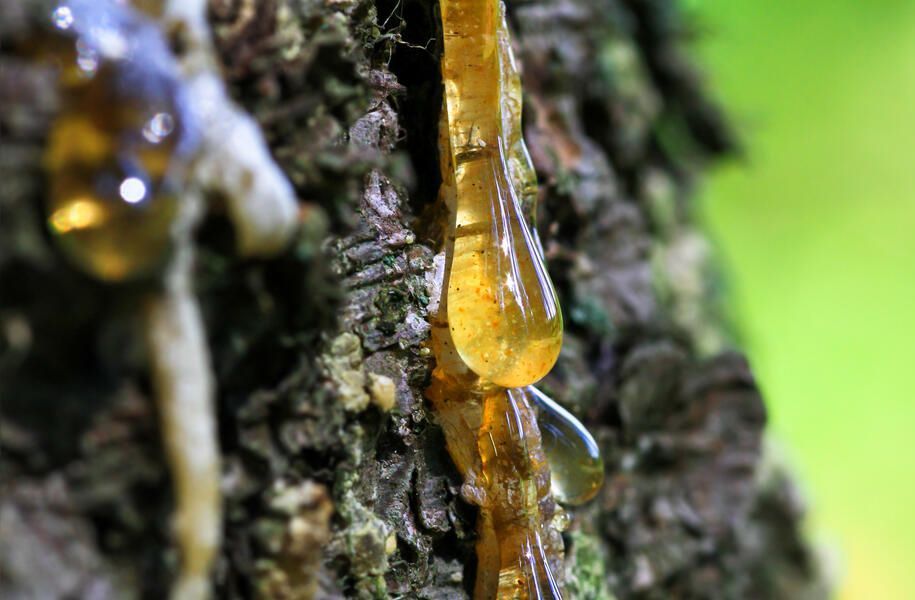
A milestone for the world: a certified bio-film made from renewable raw materials.


  • Tall pine oil is purely plant-based and is mainly extracted from the wood of coniferous trees.
  • The oil is a pure byproduct of the pulp industry (therefore no additional trees are felled and the oil does not compete with the food chain).
  • Reducing the carbon footprint by using renewable raw materials instead of fossil-limited resources
  • This bio-based film has the same properties as conventional film in terms of quality and durability.
  • What plastic does for our climate every day

    Its properties make plastic the perfect climate protector. Glass, paper, or metal are often not environmentally friendly alternatives. The low weight and lower energy consumption of its production, in particular, make plastic a true climate protector. The switch to electromobility and fuel savings in aircraft and vehicles are only possible with lightweight plastic components that replace heavy metal parts. This, in turn, significantly reduces CO2 emissions. (An Airbus A350 consists of more than 50% plastic. The situation is similar for motor vehicles. In the last 30 years, the proportion of plastic in the material mix of cars has tripled.) An important area for climate protection is construction and housing: With plastics, we achieve, for example, the improved thermal insulation of buildings necessary for energy conservation. The lower the heat or cold loss (and thus the consumption of, for example, gas, oil, and electricity), the more we protect the climate. In most cases, this insulation consists of plastic. Plastics are extremely durable. The less frequently they are replaced, the longer they last. The less often heating, water, and sewage pipes or window frames need replacing, the lower the material costs and thus the resource consumption in construction and housing. Plastic packaging is becoming increasingly lighter, which is crucial for transportation (less and less plastic is needed to achieve the same or even more ambitious goals; packaging, for example, is about 28% lighter than 10 years ago). Plastic packaging significantly extends the shelf life of food. Often, there's simply no other way. Packaging food hygienically while also keeping transportation costs down (because the more weight, the more transportation effort, and therefore more CO2 emissions) is challenging. And if food is damaged or spoils during transport, the energy and raw materials used in its production are completely wasted. Plastic packaging is therefore a powerful ally in the fight against food waste. Cost-effective treatment and transportation of process and drinking water, like wastewater transport, is hardly possible without plastic pipes. Sterile packaging and modern medical technology, including devices, catheters, and surgical sutures, are made possible solely by plastics. The syringe used for vaccinations at the doctor's office, and yes, even face masks, are made of plastic. Plastic is indispensable in our daily lives: from dental floss, kettles, dish sponges, street shoes, and electrical cable covers to windows in our homes, diapers, and pajamas (if they contain polyester – which is highly likely), and so on and so forth... Why is plastic even used in clothing? Because natural fibers like wool, leather, or cotton are no longer sufficient to meet the needs of a constantly growing global population. Hardly any other material is as versatile and diverse as plastic. Plastic is produced in large quantities because it is a material with excellent properties: extremely robust yet very flexible, weather-resistant, and flame-retardant. Whether colorful or highly transparent like glass, we find it in a wide variety of optical designs. Due to its low density, it is a lightweight material (often an alternative to glass), durable, and designed for reuse.

As a manufacturer and "distributor" of plastic products, we see ourselves as one of the first in the consumer chain to have a responsibility for product liability.


Plastics that are only used once or for a very short time are particularly problematic for the environment.


  • Reusable instead of disposable

    Prinzipiell muss festgehalten werden: dass der Ressourcenschutz der beste Klimaschutz ist, was bedeutet, das jedes Produkt (egal aus welchem Material bestehend) was nicht neu produziert werden muss, für unser Klima positiv ist. Jedes Mal, wenn ein Mehrweg-Produkt im Einsatz ist, schützen wir unser Klima, unsere Welt: weder die Neuproduktion (Konsum!) eines Produktes (als Einweg) ist notwendig, noch die Entsorgung, das Recycling. 

Facts prove it: If plastic is used responsibly and recycled as often and for as long as possible after use, it is generally more sustainable than alternative (packaging) materials.


Reuse: consistently wherever possible. Expand recycling loops to reduce the use of raw materials.


Applied to our industry/our customers, this could also mean:

- Badge holders from events can be collected and reused by the host.

Plastic cards don't always need additional outer packaging, but for paper cards it's advisable or even necessary, because paper, as a renewable resource, also needs protection.

  • Paper is better than plastic, right?

    Papier stammt zwar aus einem nachwachsenden Rohstoff, jedoch muss auch unser Waldbestand als wichtige Ressource hinsichtlich CO2 Umweltdebatte erhalten werden. 

Facts prove it: If plastic is used responsibly and recycled as often and for as long as possible after use, it is generally more sustainable than alternative (packaging) materials.

  • Recycling cycles protect our environment

    When plastics are used responsibly and recycled as often and for as long as possible after use, they are generally more sustainable than alternative (packaging) materials. Responsible use also includes employing single-material materials or films where they are advantageous. This includes using single-material films that are exceptionally easy to recycle and therefore have an extremely high recycling rate. Multi-layer composites with different layers (such as paper, aluminum, and PE) that cannot be separated during recycling should be replaced with new single-material materials or films. Poor quality is also considered a fundamental problem in plastic recycling: inferior plastics are significantly more difficult or even impossible to recycle properly. Furthermore, products of poor quality often quickly become unusable, resulting in a shorter product lifecycle, requiring new production and increasing resource consumption. The plastics processing industry is committed to the principle of product responsibility. Products must be designed in such a way that waste is avoided or reduced during production and that environmentally sound recycling after use is ensured. We process films that—depending on the type of film—are already completely recycled. The plastic production waste from folienconnection GmbH is recycled in Germany in accordance with the requirements of the German Waste Management Companies Ordinance (KrW/AbfG) and Section 56. There is NO EXPORT. Our production waste is mechanically recycled (recyclate). In mechanical recycling, used plastics are processed mechanically. Their chemical structure remains unchanged; rather, the waste parts are shredded, cleaned, and separated into different types of plastic. Material recycling is always beneficial when used plastics can be collected by type. The newly obtained material (recyclate) can serve as a raw material for various applications and replaces newly produced granules. The recycled material thus serves as a raw material for the production of plastic products and is subsequently reused in the plastics processing industry, for example, in the production of semi-finished products for the construction, furniture, or advertising sectors. Our calendered films are 100% recyclable and can be upcycled into new products at the end of their life cycle. This means that the amount of waste from short-term applications with a lifespan of a few months can be reduced, as the items can be transformed into products with a lifespan of 30 to 100 years or more. In addition to material recycling, two other recycling processes are used: - Chemical recycling: In chemical recycling, polymer chains are broken down by the application of heat. This produces monomers or oils and gases that can be used for the production of new plastics, as well as for other purposes. This type of recycling is suitable for both mixed and contaminated plastic collections. Energy Recovery: In the energy recovery of plastics, the energy contained within them is recovered through combustion. Simultaneously, the energy generated is used to produce electricity, steam, or process heat. Energy recovery is also recommended for mixed or contaminated plastic fractions. For waste, energy recovery and material recovery are the primary methods employed. In certain situations, the often-criticized energy recovery can indeed be the more economically and ecologically sound alternative, provided the product has conserved sufficient alternative resources over its life cycle. Generally, the plastics processing industry advocates for a mix of the three recovery options. Only in this way can maximum eco-efficiency be achieved, meaning optimal resource conservation at reasonable overall economic costs. Our raw material suppliers promote and support VinylPlus, a voluntary commitment by the European PVC industry to increased sustainable production and use of PVC by 2030. (VinylPlus unites the vast majority of leading PVC companies from 27 EU Member States, Norway, Switzerland, and the United Kingdom. VinylPlus is overseen by an independent monitoring board comprised of representatives from the European Parliament, the European Commission, trade unions, industry, and consumer organizations.) The VinylPlus initiative builds on the successes of the previous Vinyl 2010 voluntary commitment, all of whose objectives were met or even exceeded. (With a recycling volume of over 770,000 tons, the industry achieved another new record in 2019, exceeding 96% of its 2020 target and representing a 4.3% increase compared to 2018. Since 2000, VinylPlus has resulted in the recycling of a total of five million tons of PVC and the saving of ten million tons of the greenhouse gas CO2.) As part of the Vinyl 2010 initiative, a Europe-wide infrastructure for the collection and recycling of more than 250,000 tons of PVC per year has been successfully established, and additives such as cadmium stabilizers have been replaced. With VinylPlus, the European PVC industry has now set itself the following new goals: - To achieve a quantum leap in PVC recycling volumes and the development of innovative recycling technologies. The aim is to recycle an additional 900,000 tons of PVC annually by 2025 and at least 1,000,000 tons of PVC annually by 2030. - To address concerns regarding organochlorine emissions. - To ensure the use of additives based on sustainability criteria. - To increase energy efficiency and the use of renewable energies and raw materials in PVC production. - To promote sustainability throughout the entire PVC value chain. Furthermore, it will be necessary for the industry to already know the end application of the product and to tailor the additive mixtures and plastics accordingly so that they optimally fulfill their intended purpose and can be recycled in a resource-efficient manner. This will only work if the chemical industry networks vertically and also utilizes digitalization to better plan the entire life cycle of a material. The innovative German chemical and plastics industry should see these challenges as an opportunity to shape an economically sound and ecologically sustainable future.

Das nachhaltigste Produkt ist demnach immer eines, das nicht neu hergestellt werden muss. 

  • According to Plasticontrol, just under 1.5 million tons of plastic were produced annually in the 1950s; today, that figure is almost 400 million tons. Of course, at the beginning of the 1950s, the Earth's population was significantly smaller, at around 2.7 billion, compared to over 7.5 billion today. But our (over)consumption is also partly to blame: two cars per family are often no longer enough, that beautiful forest-green sweater that simply matches better than the old one, the latest cell phone every two years, and that weekend trip to Barcelona – these things have to be indulged sometimes… And it's virtually impossible to escape the special offer days of "Black Friday" and "Cyber Monday": these have become veritable consumer holidays. At the end of November, right in the middle of the Christmas shopping season, bargains of all kinds beckon, so cheap that people buy them even though they often don't need them – and sales records are broken, with new ones being raised every year. This isn't good for the climate and the environment: Goods are produced using energy- and resource-intensive processes, shipped halfway around the world – and in the worst-case scenario, simply discarded again. Living more sustainably for the climate and environment – Greenpeace. Consumption is a climate killer, because the overuse of resources is the main cause of the dramatic global loss of species and habitats, as well as the emission of greenhouse gases. When brand-new products are then simply destroyed out of greed, it's sheer madness in times of climate crisis! This destruction of brand-new goods has been prohibited in Germany for two years now – Greenpeace worked with you to ensure this. Since October 2020, the amendment to the Circular Economy Act stipulates that unsold goods are subject to a duty of care: This means they can no longer be destroyed; whoever offers them for sale is responsible for ensuring they are used. The increasing prevalence of online shopping often makes consumption easy. Ordering, paying, and shipping can all be done conveniently from the comfort of your couch. The barrier to buying something is quite low. Regardless of the fact that this online frenzy is destroying local businesses and regional suppliers, we should also reflect on our online purchasing habits. The more that online retailers have to transport, the more resources are consumed for packaging and shipping, which in turn means more CO2 emissions. Shopping online isn't always cheaper. How often do we find ourselves dissatisfied with our order (quality, workmanship) and have to return it? Time, money, CO2 emissions from shipping, reordering... And incidentally, if we strengthen our own local economy a little more through our purchasing decisions, we will become more independent in the future.

Wenn jede:r ihr/sein Verhalten hinterfragt, wenn jede:r etwas umdenkt, so können wir mit knapp 8 Mrd. Menschen zusammen doch viel bewegen!


Klimaschutz braucht uns alle!


Jeder kann helfen!

A Google search for the word "sustainability" yields over 350 million results. But what does sustainability actually mean?

Sustainability – as found on Wikipedia – stands for "principle of action regarding resource use" or for responsible action, ecologically speaking: handling finite resources responsibly and thus treating our environment, our one(!) Earth, sustainably and well.


Climate change, pollution, species extinction, water scarcity – these are the biggest environmental problems of our time.

The Earth doesn't need us humans – but we need the Earth, we are even dependent on it.(Why the Earth doesn't care if we save it > sustainable-being.info).


(As early as the first "World Climate Conference" (under the auspices of the UN, the First World Climate Conference (WCC-1), organized by the World Meteorological Organization (WMO) in Geneva in February 1979, experts from United Nations organizations discussed ways to curb harmful climate change caused by humans. A key focus and important outcome even then was the warning that the continued reliance on fossil fuels, coupled with the ongoing destruction of forests on Earth, would "lead to a massive increase in atmospheric carbon dioxide concentrations.") [Wikipedia] )


The pressure to use our resources sustainably is intensifying massively due to the war in Ukraine… The energy crisis is forcing us to be even more aware. Conscious heating, conscious electricity use, exploring alternatives, being more economical.


Natural resources are the foundation of our existence. For every product we buy—no matter what it is—water, soil, and raw materials have been used. Without natural resources, we wouldn't be mobile or have electricity. But these resources are finite. Some raw materials, like oil and metals, are non-renewable; sooner or later, they will be depleted. Other resources, like air, water, soil, and ecosystems, have been overexploited for decades. To stop the exploitation of the Earth, Everyone needs to pull together: politicians, businesses, and, first and foremost, everyone. Every single one of us.


Not only does everything that is already in use consume energy and resources, but also the production of new goods itself - we should be aware of this when making our consumption choices.


When we think about climate protection, various things come to mind: slowing down global warming, renewable resources, recycling, pollution from (plastic) waste. Often, the avoidance of plastic is also mentioned in this context.

However, this completely overlooks what plastic every day does something for the climate.


Sources:

  • www.google.de
  • www.wikipedia.de
  • www.alkordraka.com
  • www.renolit.com
  • www.ikb-blog.de
  • www.gkv.de
  • www.vinylplus.eu
  • www.umweltbundesamt.de
  • www.alnatura.de
  • www.nabu.de
  • www.egofm.de
  • www.wwf.de
  • www.greenpeace.de
  • www.bib.bund.de
  • www.duh.de


(Our contribution to) sustainability


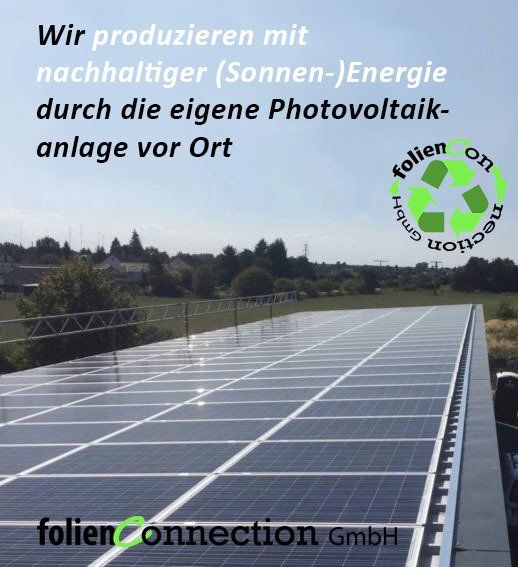
  • Use renewable energies such as electricity from your own photovoltaic system (our products are produced using solar energy)
  • Use of recycled film and recycling of the film; no export
  • Waste prevention in general, regardless of the type of material used (e.g., also through optimal material utilization in our production)
  • To produce high-quality, durable products that can be reused for years, thus conserving resources and energy by avoiding new production or through recycling/reuse, thus protecting the environment in two ways.


The most sustainable product is always one that does not need to be manufactured anew.
As a manufacturer and "distributor" of plastic products, we see ourselves as one of the first in the consumer chain to have a responsibility for product liability.


Plastics that are only used once or for a very short time are particularly problematic for the environment.


  • (Our) key to sustainability

    Nachhaltigkeit bedeutet im Wesentlichen (auch für uns bei folienconnection GmbH):

Facts prove it: If plastic is used responsibly and recycled as often and for as long as possible after use, it is generally more sustainable than alternative (packaging) materials.


Reuse: consistently wherever possible. Expand recycling loops to reduce the use of raw materials.


Applied to our industry/our customers, this could also mean:

- Badge holders from events can be collected and reused by the host.

Plastic cards don't always need additional outer packaging, but for paper cards it's advisable or even necessary, because paper, as a renewable resource, also needs protection.

Did you know?

  • Did you know that PVC consumes fewer fossil resources compared to other thermoplastic products, as it is produced from 43% crude oil and 57% salt? Other polymer products use more than 80% crude oil.
  • that there is even a bio-PVC film with tall oil (purely vegetable oil, mainly derived from the wood of coniferous trees, as a pure by-product of the pulp industry)?
  • That PVC consumes less energy in production compared to other thermoplastic products?
  • that PVC causes less environmental pollution in terms of (CO2) than other plastics?